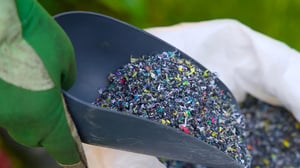
The handling of plastic pellets is among the relevant sources of unintentional microplastic releases in Europe. If these particles enter soils, water bodies and seas due to losses along the value and logistics chain, this is associated with demonstrable ecological impacts that also pose risks to human and animal health. The decisive factor here is the unintentional release during the manufacturing, processing, storage and transport of plastic pellets regardless of their shape, form or size.
Legal framework: entry into force and applicability
On 16 December 2025, Regulation (EU) 2025/2365 on preventing the release of plastic pellets to reduce environmental pollution from microplastics entered into force. Most requirements apply from 17 December 2027. With the Regulation, the European Union establishes a directly applicable legal framework that sets binding organizational and technical requirements along the entire value and supply chain.
Integration into the existing EU legal framework
The Regulation fits into the EU legal framework already in place for plastic pellets. The REACH Regulation most recently regulated the placing on the market of intentionally added polymer micro‑particles. By contrast, Regulation (EU) 2025/2365 specifically addresses the unintentional release of plastic pellets and pursues a preventive approach directly at the source. There are also intersections in particular with waste law, occupational safety law and the Industrial Emissions Directive.
Practical implications for companies
In practice, this requires a fundamental change in thinking. The Regulation introduces EU‑wide uniform requirements for the handling of plastic pellets. Activities particularly affected include:
- Production including processing, conversion and recycling
- Blending, packaging and distribution
- Logistics, storage, transport
- Cleaning of plastic pellet containers
In this context, the Regulation sets out specific requirements for handling, organization and information sharing. These are complemented by certification and approval requirements, publication obligations, effective sanction mechanisms, as well as liability and compensation provisions.
Who is affected? Overview:
As a rule, the scope of the Regulation covers companies that handled at least five tonnes of plastic pellets in the Union in the previous calendar year. There are also simplified rules for installations with less than 1,500 tonnes per year and for micro‑enterprises.
Those primarily affected include:
- plastics processing operations
- plastic recycling
- packaging and automotive sectors
- operators of filling, storage and transshipment facilities
- transport service providers
Also covered are:
- operators of installations for cleaning plastic pellet containers and tanks
- EU and non‑EU carriers transporting plastic pellets in the Union
In addition, requirements apply to shippers as well as to agents and masters of seagoing vessels that carry plastic pellets in freight containers and call at or depart from a port of a Member State.
Through this horizontal addressing, the European Union establishes a comprehensive, gap‑free supply chain approach.
Core requirements of the Regulation
The aim of the Regulation is to prevent releases of plastic pellets along the entire supply chain and—if releases nevertheless occur—to take effective measures to contain or remove them.
The most important requirements at a glance:
Key requirements for installation operators:
- Preparation, implementation and continuous updating of a risk management plan with all information specified by the legislator
- Submission of the risk management plan with a self‑declaration of conformity to the competent authority
- Taking specific measures in the event of a release of plastic pellets
- Annual notification of each installation operated, stating the annual quantity of plastic pellets handled, to the authority, and notification of changes
- Training employees regarding the handling of plastic pellets
- Assessment of each individual installation and evidence that the installation complies with the requirements
- Additional requirements depending on company size
Key requirements for EU and non‑EU carriers:
- Taking special measures during and after loading and unloading, and in the event of releases
- Informing the authorities about the first transport of plastic pellets and any changes
- Appointment of an authorized representative for non‑EU carriers
Key requirements for shippers:
- Safe packaging
- Provision of the prescribed transport information
From when do which requirements apply?
With the Regulation entering into force on 16 December 2025, basic organizational and preparatory requirements already have to be fulfilled. These include, in particular, requirements to prevent releases as well as documentation and training requirements. Most operational requirements for installation operators and carriers, however, will only apply from 17 December 2027. In view of the considerable depth of intervention, the remaining implementation period is comparatively short.
What affected companies should do now – a checklist:
- Complete mapping of the value and logistics chain focused on plastic pellets
- Analysis, recording and documentation of material and data flows
- Development of an installation‑specific risk management plan with clear responsibilities, technical specifications, training, monitoring and reporting processes
- Selection of suitable certification bodies
- Adaptation of transport contracts and transport processes, ensuring loading, stowage and information requirements
- Definition of clear interfaces between the actors in the value and logistics chain
- Adjustment of risk assessment
- Safeguarding through technical, organizational and contractual measures
- Integration into an existing compliance management system
| Are you already an Eticor customer? | Not an Eticor customer yet? |
| If your company falls within the scope of the regulation and you have ordered our Legal module Product Law, the corresponding requirements have already been added to your legal register. If you are affected and have not ordered the Product Law module, you can request a non‑binding quote. If you have substantive questions, your personal Legal Expert will be happy to assist you. | If you are looking for compliance management software that helps you keep your relevant requirements structured and transparent in view, feel free to contact us. We look forward to the exchange. |
Conclusion
Regulation (EU) 2025/2365 for the first time establishes a uniform, directly applicable legal framework across the Union to prevent releases of plastic pellets along the entire value and logistics chain. It goes well beyond previous, fragmented regulatory approaches and codifies comprehensive organizational, technical and contractual requirements for manufacturers, installation operators, logistics actors and carriers. By introducing binding risk management, documentation, training, monitoring and certification requirements, as well as a standalone liability and sanctions regime, the Regulation marks a paradigm shift in European environmental and product responsibility law. In view of the staged start of application, the considerable depth of intervention and the complex interfaces between operations, transport and external services, affected companies have only a limited timeframe to align their processes in a compliant manner. Early, strategically guided compliance management is therefore imperative not only from a regulatory perspective, but also in terms of liability and risk law.
Your personal contacts
Do you have questions about our blog post or our services? Feel free to contact us — we look forward to hearing from you.